
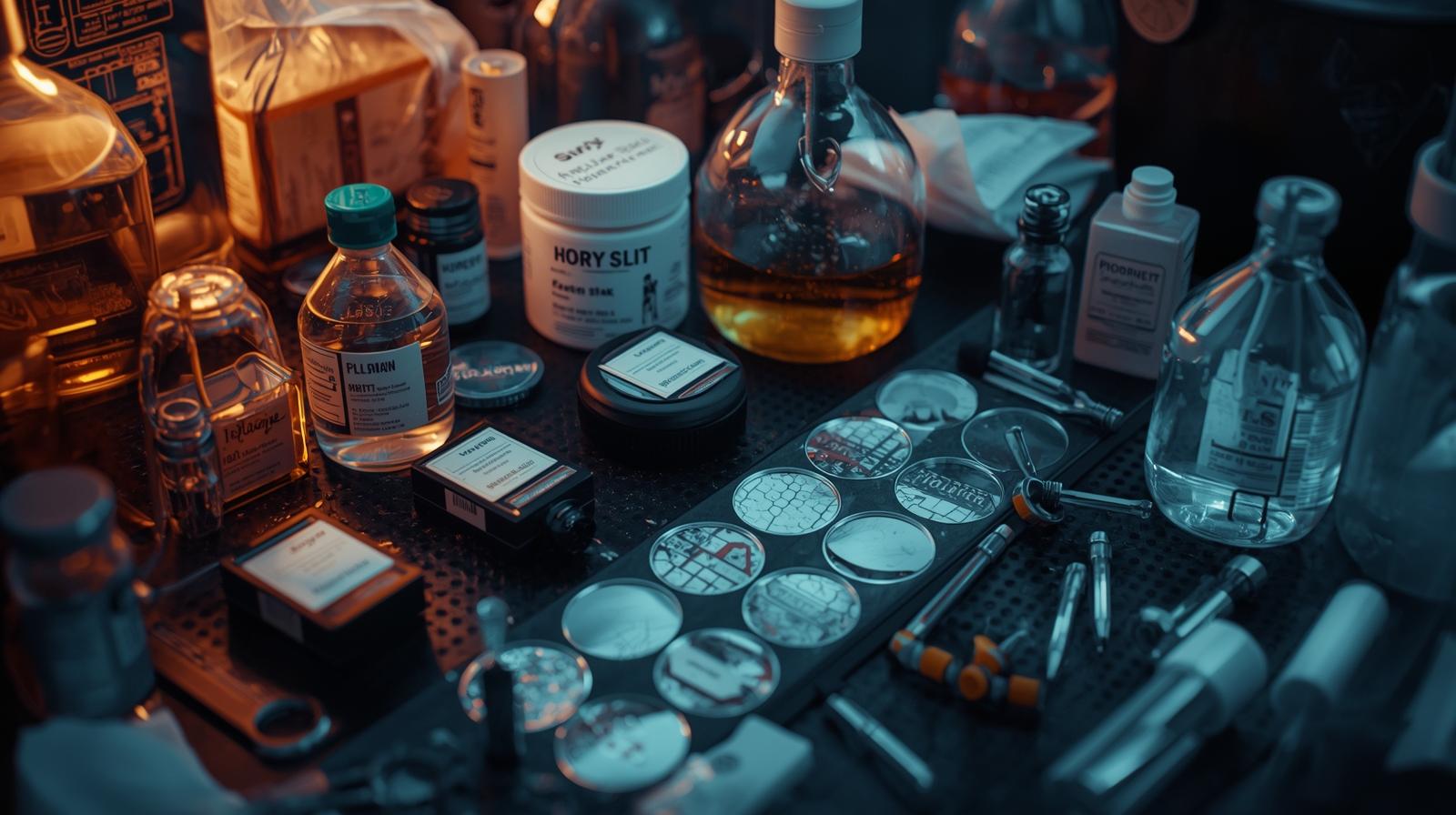
Essential Biology Lab Supplies: Finding Quality Equipment and Materials
Article Overview
Article Type: Informational
Primary Goal: Give purchasing directors and CFOs a practical, procurement-focused guide to identify, evaluate, and procure high quality biology lab supplies that meet technical, regulatory, and budgetary requirements
Who is the reader: Purchasing directors and chief financial officers at research institutions, universities, clinical labs, biotech companies, and government laboratories who manage indirect procurement and capital spend and are responsible for vendor selection, contract negotiation, and budget optimization
What they know: They understand procurement cycles, contract vehicles, and basic lab categories such as consumables, instruments, and PPE but may not know granular technical specifications, regulatory benchmarks for specific biology supplies, or vendor-level product differences. They want clear buying criteria, trusted supplier examples, cost control strategies, and procurement templates
What are their challenges: Balancing quality and cost under tight budgets, ensuring regulatory and biosafety compliance, reducing supply chain risk and lead times, consolidating suppliers without sacrificing service, and documenting total cost of ownership for capital and recurring purchases
Why the brand is credible on the topic:
Tone of voice: Practical, procurement-first, data driven, and actionable. Prioritize clarity and specificity over marketing language. Use metrics, vendor names, and procurement examples. Keep language professional and decision oriented
Sources:
- CDC Laboratory Safety webpage https://www.cdc.gov/labsafety/index.html
- OSHA Laboratory Safety guidance https://www.osha.gov/laboratory-safety
- Thermo Fisher Scientific product and buying guides https://www.thermofisher.com
- Fisher Scientific commercial catalog https://www.fishersci.com
- Merck Sigma Aldrich catalog and technical data sheets https://www.sigmaaldrich.com
Key findings:
- Procurement decisions in labs must account for technical specifications such as reagent grade, material compatibility, sterility certification, and calibration records in addition to price
- Regulatory and biosafety compliance drives vendor requirements and documentation for audits; suppliers with traceable certificates of analysis and calibration records reduce audit risk
- Supplier consolidation and preferred vendor contracts reduce overhead and often secure better lead times and pricing, but require careful evaluation of backup sourcing for critical items
- Total cost of ownership including maintenance, calibration, consumable usage rates, and downtime costs often outweighs initial purchase price for equipment
Key points:
- Break lab supplies into clear procurement categories with representative items and minimum technical specs for each
- Provide concrete vendor and product examples that procurement teams recognize and can use as benchmarks
- Explain regulatory and documentation requirements required for compliance and audits
- Offer procurement strategies and cost control tactics tailored to purchasing directors and CFOs, including vendor consolidation, contract language, and inventory management
- Supply ready to use checklists and RFP guidance that buyers can apply immediately
Anything to avoid:
- Avoid generic, high level statements without concrete vendor or product names and specifications
- Do not use promotional language or hard sells for Hubzone Depot; include the business as a procurement partner with practical use cases
- Avoid technical deep dives aimed only at bench scientists; maintain procurement focus while explaining technical requirements clearly
- Do not make claims about products that cannot be verified such as guaranteed lowest price or availability
- Avoid ambiguous procurement advice such as always choose lowest price or always consolidate without context
External links:
- https://www.cdc.gov/labsafety/index.html
- https://www.osha.gov/laboratory-safety
- https://www.fishersci.com
- https://www.thermofisher.com
- https://www.sigmaaldrich.com
Internal links:
- Emergent Ethical Supplier Ecosystem: Synergizing Localized Innovation for a
- Emergent Ethical Supplier Ecosystem: Synergizing Localized Innovation for a
- 5 Key Steps for Effective Supplier Vetting: A Must-Read for Business Owners
- Morning Mist Over Lake Sets Serene Tone for a Productive Day
- Stock Market: A Crucial Platform for Wealth Growth and Financial Security
Content Brief
This article is a procurement centered guide to essential biology lab supplies and how purchasing directors and CFOs should evaluate quality, compliance, and cost. It should be practical and structured for decision makers not bench scientists. Cover the main categories of supplies, the minimum technical specifications procurement teams must require, regulatory documentation and audit readiness, vendor examples and product benchmarks, procurement strategies to control cost and minimize supply disruption, and a downloadable procurement checklist and RFP template. Use short, scannable sections, data points where possible, and embed real product names such as Eppendorf pipettes, Corning cell culture flasks, Beckman Coulter centrifuges, Thermo Fisher freezers, Merck Sigma Aldrich reagents, 3M PPE, Fisher Scientific consumables, and Hubzone Depot as a procurement partner. Tone should be neutral, fact based, and actionable. Avoid jargon overuse and do not make unverifiable performance claims
1. Categorizing essential biology lab supplies for procurement
- Consumables: pipette tips, microcentrifuge tubes, cryovials, culture plates, filter tips; example items: Eppendorf epT.I.P.S. aerosol barrier tips, Corning 96 well plates
- Instruments and equipment: pipettes, centrifuges, microscopes, freezers; example items: Eppendorf Research plus single channel pipettes, Beckman Coulter Allegra X-15R centrifuge, Thermo Fisher Forma ultralow temperature freezers
- Reagents and chemicals: buffer solutions, culture media, molecular biology kits; example items: Merck Sigma Aldrich agarose, Thermo Fisher TAE buffer, MilliporeSigma DNA extraction kits
- Personal protective equipment and safety: nitrile gloves, safety goggles, lab coats, biosafety cabinets; example items: 3M Aura respirators, TIDI Healthcare isolation gowns, Labconco Class II biosafety cabinets
- Storage and waste: cryogenic storage boxes, chemical waste containers, cold chain packaging; example items: Corning cryogenic storage boxes, Pelican cold chain shippers
2. Quality specifications procurement teams must require
- Material and grade: sterile versus non sterile, molecular biology grade, RNase DNase free, USP or ACS reagent grade with examples of labeling to request
- Dimensional and performance tolerances: pipette volume accuracy and precision specs, centrifuge RPM and temperature stability ranges with example acceptance limits
- Certifications and traceability: request certificates of analysis, ISO 9001, ISO 13485 when applicable, CE marking and documentation for clinical equipment
- Calibration and maintenance records: require COA and calibration certificates for balances, pipettes, centrifuges and provide example retention periods
- Shelf life and storage requirements: expiration dating for reagents, cold chain requirements and suggested labeling for procurement contracts
3. Regulatory, biosafety, and audit readiness requirements
- Align purchases with OSHA and CDC guidance including biosafety level requirements and PPE minimums; reference OSHA laboratory safety standards
- Documentation to require from vendors: certificates of analysis, MSDS Safety Data Sheets, instrument manuals, and service level agreements
- GLP and clinical lab considerations: for GLP or CLIA regulated labs require traceable documentation and validated equipment lists
- Chain of custody and inventory logs: implement batch level tracking for critical reagents and sample containers
- Vendor audit rights and supplier qualification: include right to audit clauses and supplier qualification questionnaires in contracts
4. Procurement strategies for purchasing directors and CFOs
- Supplier consolidation versus diversification: pros and cons with examples of suppliers to consolidate with such as Thermo Fisher, Fisher Scientific, Avantor and when to maintain multiple sources for critical items
- Contract types and negotiation levers: blanket purchase agreement, scheduled pricing, minimum order quantities, lead time SLAs and example contract clauses to request
- Inventory management models: just in time, safety stock calculations, Kanban for consumables and example reorder points based on usage rates
- Leveraging HUBZone and government procurement benefits: how Hubzone Depot can be used as a Tier 1 supplier to meet set aside or socio economic goals while maintaining compliance
- Contingency planning: dual sourcing, safety stock for critical reagents, and expedited freight cost modeling
5. Cost control and total cost of ownership analysis
- Calculating TCO: initial purchase price, consumable usage rates, maintenance and calibration costs, downtime cost examples for a benchtop centrifuge
- OEM versus aftermarket consumables: cost tradeoffs and risk examples such as third party tips versus manufacturer certified tips
- Warranty, service contracts and lifecycle planning: include example service level prices for Thermo Fisher maintenance versus independent service provider
- Bulk purchasing and volume discounts: breakpoints to negotiate with vendors like Fisher Scientific or Avantor and example savings scenarios
- Financial metrics for decision making: ROI timeframe for capital equipment, net present value example for replacing an aging ultralow freezer
6. Trusted suppliers and specific product benchmarks to use in RFPs
- Thermo Fisher Scientific: Thermo Fisher Forma freezers, Thermo Scientific Herasafe biosafety cabinets and when to prefer their instruments
- Eppendorf and Sartorius: Eppendorf Research plus pipettes, Eppendorf 5424 centrifuge, Sartorius balances and why they set accuracy benchmarks
- Beckman Coulter and Bio Rad: Beckman Allegra centrifuges and Bio Rad power supplies for electrophoresis as equipment reference models
- Merck Sigma Aldrich and MilliporeSigma reagents: listing reagent quality and COA expectations for buffers and chemicals
- Av/Avantor VWR and Fisher Scientific: consumables and labware sourcing with example product lines such as VWR microplates and Fisherbrand tips
- Hubzone Depot as procurement partner: inclusion in vendor list, advantages for HUBZone compliance, consolidated invoicing, and managed catalog examples
7. Procurement checklist, RFP template elements, and quick templates
- Pre purchase checklist: required specs, certifications, calibration expectations, desired SLAs, delivery windows and acceptance criteria
- RFP sections to include: technical specifications, COA and MSDS requirements, pricing model, lead times, service and calibration terms, termination and audit clauses with suggested wording
- Evaluation scorecard: weighting example such as 40 percent technical fit, 30 percent total cost of ownership, 20 percent lead time and vendor reliability, 10 percent ESG or HUBZone status
- Template clauses for urgent supply: expedited lead time pricing, penalty or rebate language for missed SLAs, defined emergency reorder process
- Post procurement inspection and onboarding: receiving inspection checklist, labeling, inventory entry, and vendor onboarding documents to obtain
Frequently Asked Questions
What minimum documentation should be required from lab suppliers for regulatory audits
Require certificates of analysis, safety data sheets, calibration and service records, and instrument manuals to demonstrate traceability and compliance
How do purchasing teams assess whether to buy OEM consumables or third party alternatives
Compare total cost including failure risk and validation time; require third party items to provide performance data and run an initial qualification batch before wider adoption
Which items need dual sourcing to avoid operational disruption
Critical reagents, proprietary kits, and single source instruments that halt workflows should have at least one qualified alternate or validated swap plan
How should CFOs evaluate the return on replacing aging equipment such as ultralow freezers
Model energy savings, reduced maintenance costs, decreased downtime risk, and potential sample loss avoidance to calculate payback period and NPV
What procurement contract elements reduce risk for urgent or backordered lab supplies
Include lead time SLAs, expedited shipping rates, defined penalty or rebate terms for missed delivery, and a contingency sourcing clause
Can Hubzone Depot support HUBZone set aside requirements while delivering competitive pricing
Yes, Hubzone Depot can act as a Tier 1 procurement partner to meet HUBZone socioeconomic goals while providing consolidated procurement services and vendor management
What inventory management approach works best for high turnover consumables
A hybrid Kanban with defined safety stock levels based on historical usage and lead time variability reduces stockouts while limiting excess inventory