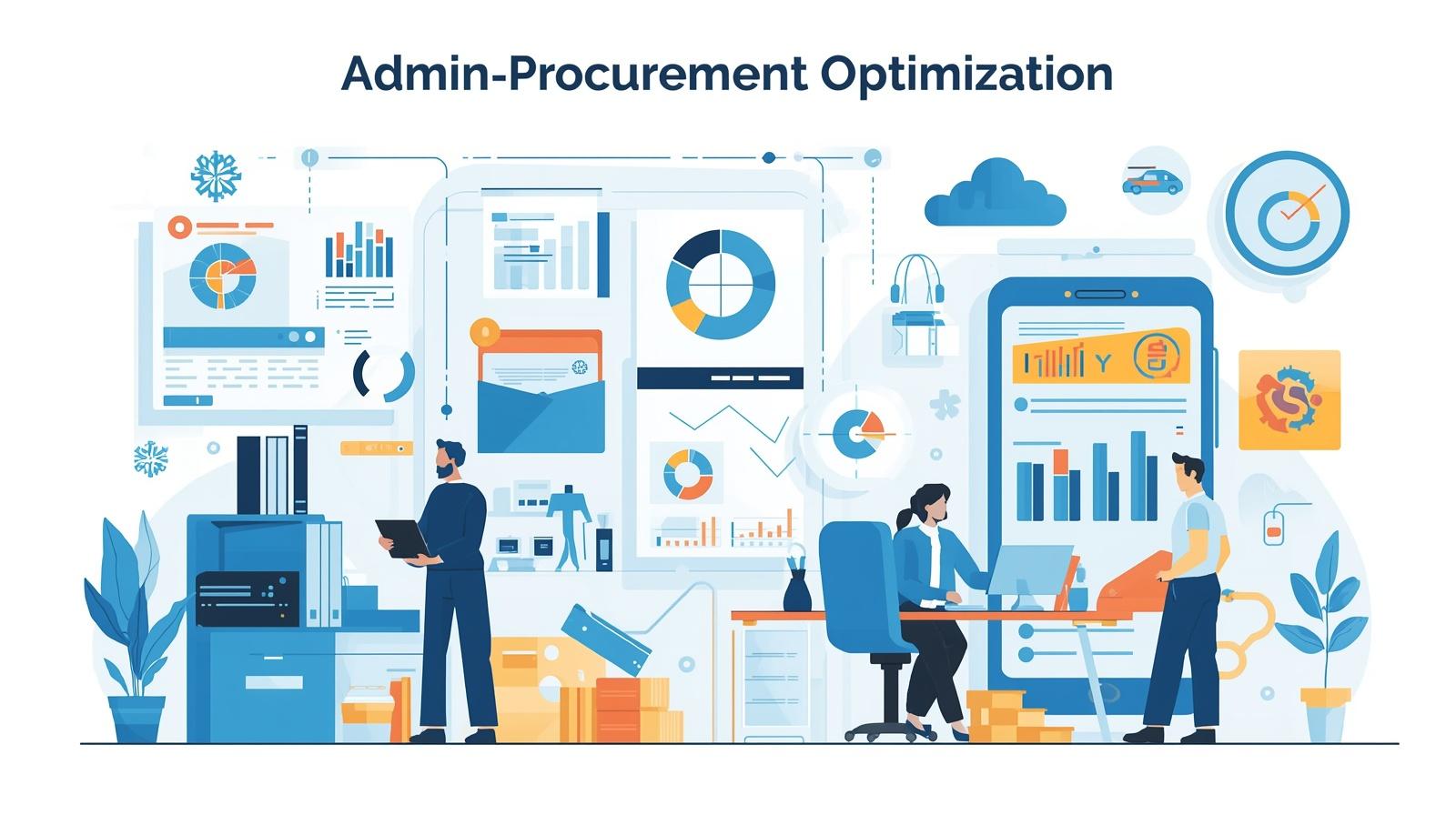

Acclaim Technical Services delivered through Hubzone Depot gives procurement teams a practical Tier 1 option to consolidate indirect spend, reduce maverick buying, and simplify HUBZone compliance. Below you will find a clear evaluation framework for purchasing directors and CFOs, a 30 60 90 implementation roadmap, and measurable ROI metrics to validate savings and control. The article also includes integration notes for Coupa, SAP Ariba and Oracle, plus real fulfillment examples and the KPIs finance teams should demand before committing.
1. Why Hubzone Depot and Acclaim Technical Services Belong in Your Indirect Procurement Strategy
Direct point: If your goal is to cut the operational cost of indirect spend while preserving HUBZone credit and compliance, acclaim technical services delivered through Hubzone Depot is not a marketing option — it is an operational lever. Hubzone Depot acts as a Tier 1 aggregator and Acclaim Technical Services (aka Acclaim TS, ATS) supplies a mix of categories you will actually buy: language and cultural services, technical staffing, cybersecurity support, IT peripherals, and facilities MRO.
How the pairing maps to procurement needs
Category fit: Use Acclaim Technical Services for indirect categories that are hard to standardize but high in transactional cost — translation and interpretation (see ATS translation services), intelligence and analytic support (ats intelligence solutions), temporary professional staffing, and specialty IT security services (ats cyber security solutions). Hubzone Depot provides the catalog and contract control necessary to make these categories behave like catalog spend.
- Expected outcomes: Fewer vendors to manage, stronger audit-ready HUBZone documentation, and consolidated invoicing and reporting across business units
- Practical limitation: Consolidation increases dependence on single sources; mitigate with secondary-supplier clauses, explicit SLAs, and inventory or drop-ship fallbacks
- Integration reality: Punchout and catalog integration will cover 70 to 80 percent of routine buys, but expect manual handling for bespoke services such as classified intelligence support or complex security engagements
Concrete example: A mid-size government contractor moved facility maintenance, translation services, and low-voltage IT purchases under Hubzone Depot with Acclaim Technical Services as the primary supplier. They implemented a Coupa punchout, piloted one business unit for 60 days, and reduced supplier contacts by 42 percent while improving invoice cycle time through consolidated billing and a single reconciled ASN flow.
Judgment that matters: Buyers often assume catalog consolidation is purely technical. It is not. The real work is catalog hygiene and SKU normalization — mapping your top 500 spend lines to the new catalog reduces friction far more than an enterprise punchout alone. If you skip that step, you will get catalog fatigue and user bypasses.
If you want to vet certification and integration details, start with Hubzone Depot's supplier pages and the SBA HUBZone guidance: Hubzone Depot and SBA HUBZone program.
Frequently Asked Questions
Straight answer up front: Procurement and finance teams that pick Acclaim Technical Services through Hubzone Depot want predictable compliance, clean integration, and measurable cost control — not marketing claims. This FAQ focuses on the operational details you will actually need to validate when you evaluate acclaim technical services as a Tier 1 partner.
How does Hubzone alignment actually work for federal goals: Hubzone Depot maintains a network of HUBZone suppliers and supports certification evidence capture; buyers should require supplier attestations, an automated SAM status check, and a retention policy for supporting documents. For a practical workflow see Hubzone Depot on supplier documentation and check the SBA HUBZone rules at SBA HUBZone program to align your audit cadence.
Integration realities with Coupa, Ariba, Oracle and others: Expect a cXML punchout for catalog items and API or EDI fallbacks for invoices and ASNs. Insist on a test plan that includes: end-to-end PO creation, order acknowledgement, ASN, and invoice reconciliation. Tradeoff: punchouts cover steady-state buys; bespoke services still need SOW workflows and manual acceptance gates.
Which metrics actually prove value to CFOs: Beyond headline savings, demand three operational metrics: invoice exception rate, average touches per order, and working capital impact from invoicing cadence. My judgment: percentage reduction in invoice exceptions is a better early indicator of operational control than headline percent savings, which can lag and be noisy.
Onboarding time and what extends it: A clean punchout pilot can finish in 30 days; a cross-ERP, multi-region rollout goes toward 90+ days. The usual blockers are custom attribute mapping, tax/nexus reconciliation for invoicing, and classified or clearance-heavy scopes that require extra vetting.
Concrete example: A defense contractor needed rapid linguist support for an overseas exercise. They used Hubzone Depot for routine translator bookings under a catalog flow, while Acclaim TS delivered surge staffing under short-form SOWs. The split approach preserved punchout efficiency for normal buys and used contracted SOW terms for mission-critical surge work — reducing approval latency without compromising vetting.
Practical limitation to plan for: Consolidated invoicing improves reconciliation but can create cashflow timing and coding complexity across business units. Mitigate this by defining invoice cadence, GL mapping rules, and a dispute resolution SLA in the contract rather than treating invoicing as an afterthought.
Takeaway: Validate Acclaim Technical Services on contract-level artifacts and operational KPIs, not glossy capability statements. Run a short, instrumented pilot, lock down invoicing and secondary-supplier fallbacks, and use the pilot metrics to authorize wider rollout.